
Christian meditation history
A Brief History Of Christian Meditation
Christian meditation is not a modern innovation. From Jesus and the Apostles to the Desert Fathers and Mothers, medieval mystics, monastic communities, and contemporary teachers, Christians have sought God through silence, prayer, contemplation, and attentive presence. This timeline highlights some of the most influential voices who have helped preserve and pass on this sacred tradition.
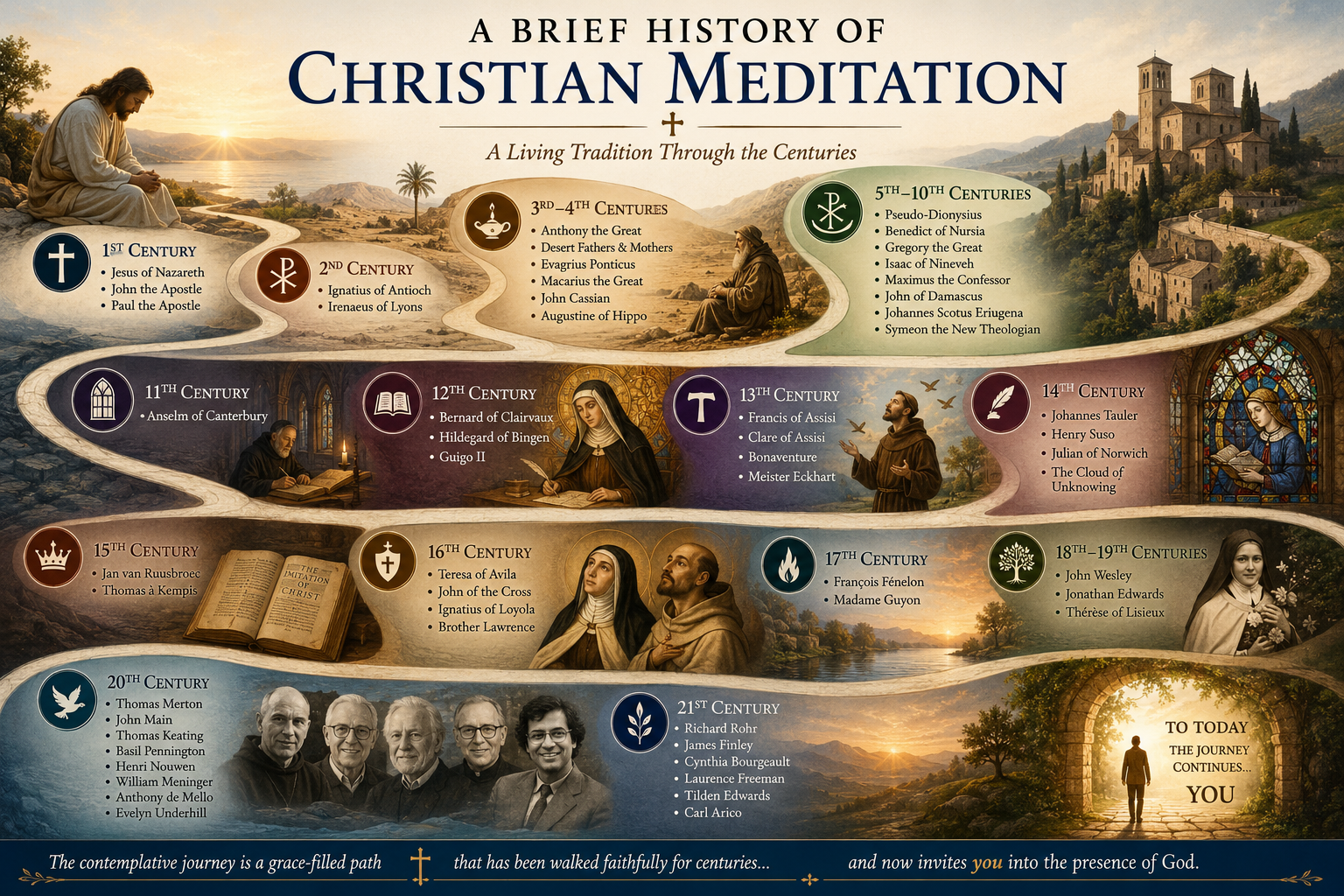
Returning To The Gift Of Contemplation
Thomas Keating traces the story of contemplative prayer through Christian history, revealing both its rich origins and the reasons it has been largely misunderstood in modern times. For the first fifteen centuries of Christianity, contemplation was not seen as something rare or reserved for a spiritual elite. It was understood as the natural unfolding of a deep relationship with God.
In the early Church, contemplation meant an intimate, experiential knowledge of God rooted in love. Drawing from biblical language like gnosis, a knowing that involves the whole person, early Christians understood that to know God was not simply to think about Him, but to encounter Him.
Church fathers such as Gregory of Nyssa and Clement of Alexandria described contemplation as a loving awareness of God’s presence: a quiet resting in Him. This was not passive or empty, but deeply alive, marked by peace and attentiveness.
Lectio Divina: Scripture, Prayer, And Stillness
The primary path into this experience was a simple and integrated practice called lectio divina, or sacred reading. People would read Scripture slowly, reflect on it, respond from the heart in prayer, and eventually be drawn into stillness.
These were not separate techniques, but movements within a single prayer experience. Contemplation was seen as the natural fruit of listening to God.
Read
Receive Scripture slowly and attentively.
Reflect
Let the Word speak into the heart and life.
Pray
Respond to God with honesty and love.
Rest
Become still in God’s presence.
How Contemplation Became Separated From Ordinary Prayer
Beginning around the 12th century, a shift occurred. The rise of intellectual analysis in theology brought structure and clarity, but it also introduced a tendency to categorize and systematize spiritual life.
Over time, prayer was divided into distinct types: meditation, affective prayer, and contemplation. This separation unintentionally made contemplation seem extraordinary and unattainable for many people.
Historical challenges deepened this shift. Events such as the Black Death, the Hundred Years’ War, and divisions within the Church led to spiritual instability. In response, new methods of prayer developed that emphasized discipline and structure. While helpful in some ways, they often became more complex and less open to the simplicity of resting in God.
From Structured Meditation To Recovery
In the 16th century, Ignatius of Loyola introduced the Spiritual Exercises, which offered powerful methods of prayer involving imagination and reflection. Although Ignatius intended to lead people toward contemplation, later interpretations often focused heavily on structured, intellectual meditation.
Further complications arose from controversies such as Quietism, a distorted teaching about passivity in prayer, and Jansenism, which emphasized human unworthiness. These movements fostered fear and suspicion around contemplation.
By the 18th and 19th centuries, many Christians were taught that structured meditation was the highest form of prayer available to them. Contemplation was viewed as unusual, even dangerous, and not something to pursue. This created frustration for many who felt drawn beyond words and thoughts into silence.
Keating’s central message is hopeful: this was not always the case. The original Christian tradition clearly teaches that contemplation is the normal development of a sincere spiritual life. It is not reserved for a few, but offered to all who seek God with love.
Why This History Matters Now
Understanding this history helps explain why many people today feel disconnected from deeper prayer. It also opens the door to recovery: a return to the simplicity of resting in God’s presence, where contemplation is once again recognized as the heart of the Christian journey.
Adapted from Teresa Yerkes’ 2026 summary of Thomas Keating’s history of contemplative prayer in the Christian tradition.